
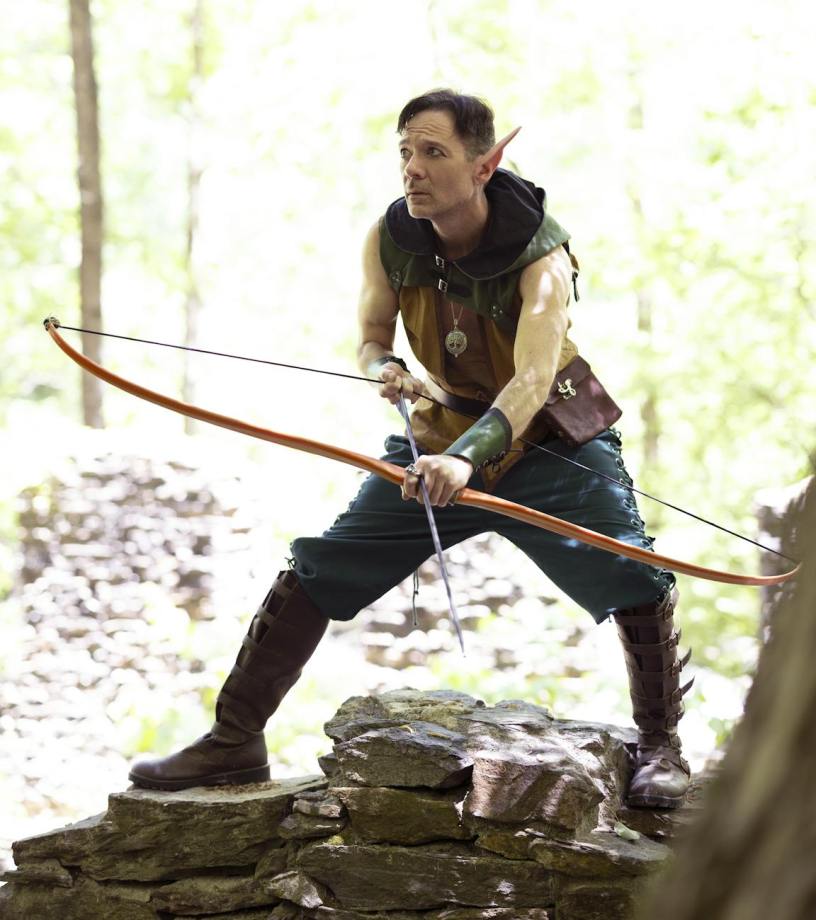
Contrary to popular DungeonTube opinions.
Once upon a time in a small town in rural Iowa, lived a small group of Dungeons & Dragons players along with their humble Dungeon Master. We didn’t know what the Hell “homebrew” even really was yet because none of us were beer drinkers and the word hadn’t been applied to the TTRPG space yet. Before the Internet boom of the late 1990s-early 2000s, early players of D&D and Traveller used “homebrew” interchangeably with phrases like “house rules” or “variant systems.”
It was pretty widely accepted that if you joined someone else’s game, you agreed to abide by their house rules without question. Otherwise you were probably shown the door. The same applied to game clubs and other common spaces. Most of the time it was little things like what to do if your die rolls of the table or if your die landed at a funny angle between two numbers (cocked.) I knew one gent in college that had a 20+ page handwritten document that he photocopied because he had added so many things to Basic D&D over the years. But nothing was too wild until more recently with the advent of D&D 5E/5.5E.
Without getting too historical, D&D 3E with the OGL is where homebrew got stickier.
Suddenly everyone and their dog was making D&D content. Most companies were thriving on it in some fashion. There were D20 variations on every game imaginable and references to those core books for everything else. I kinda loved it, personally.
Designers and writers were cranking out lots of material, often from boxes and binders built around other D&D campaigns. I’m guilty of that in a roundabout way even now when I dive into my notes for old magic items and spells to convert to Dragonbane. Homebrew was the business we were in and business was good. It still stands today as kind of good, but things changed.
Even back in the D&D 3E/3.5 era, DMs had to be careful with what they allowed into their campaign. Some sourcebooks started coming out with their own class, skill, feat, and spell variants that went wildly off the rails in terms of game balance. I seem to recall something about a Level 5 Barbarian dual-wielding two handed swords and a witch class that made me want to cry sometimes. Although we were mostly blaming the players for dredging stuff up out of third-party content or DMs (like me) for being dumb enough to say “yes” to it. Yeah, I’m guilty of allowing too much added stuff into my 3.5 campaign.
Back in the BECMI era, we homebrewed everything.
It wasn’t “Greyhawk” or “Forgotten Realms.” It was Jeff’s World this weekend, or Travis’ World on Sunday morning. Everything was unique to the Dungeon Master. We didn’t even name the plane or the realm or whatever.
Later on one of us grabbed the Greyhawk box and then someone else bought Forgotten Realms because Waterdeep looked cool. Pretty soon we were exploring some published settings, but for the most part it was still homebrew with different labels. I got into Kara Tur pretty heavily right before 2nd Ed AD&D came out.
We did dip into a few published modules here and there. X1: Isle of Dread and Tomb of Horrors topped the list. I also ran a few things out of Polyhedron and later Dungeon Magazine. But probably 90% of the rest of our adventures were created by whoever was running the game that day.
I had a whole series where one of our players had to delve into five different dragon lairs to obtain Dragon Slayer swords and eventually went up against Tiamat herself long, long before 5E came about. All of the dragons’ lairs were drawn on brown grocery bags and we used whatever lead minis we had at the time for the characters. It was a hoot back then. Those dragons were tough.
So what happened to give “homebrew” a negative connotation?
First of all, I think the company entrusted with the Dungeons & Dragons game basically decided they only wanted people buying official or at least licensed adventures (via the DungeonMastersGuild.com or D&D Beyond, through which they receive a hefty cut of the profits.) It hasn’t stopped everyone and their dog from slapping the “Made for 5E” label on their products thanks to the Open Game License, but that mostly acts as a marketing tool for the third-party publishers. Like it or not, D&D is still the world’s most easily recognizable roleplaying game.
Wizards of the Coast just wants to make sure they are monetizing the players and DMs as much as possible and rake in the profits for their Reptilian Overlords at Hasbro. (It’s my tinfoil hat theory. Back off! Bwah ha-ha-ha.) In all seriousness, it is kinda their purpose as a corporation to make money for the stockholders, etc. Sometimes it’s just a matter of how ethically they go about it or don’t.
DungeonTubers remain WotC’s number one source of public relations these days. It’s pretty much in those YouTubers’ hands to make sure they play nice with WotC and discourage players from creating much of anything for themselves. I’m sure it doesn’t hurt that those same DungeonTubers who have their own million-dollar Kickstarters that they would rather see people invest in rather than create their own D&D content. (But I’m not bitter.)
No joke, I see popular DungeonTubers attaching their name to any given 5E crowdfunding project and the profits double, triple or more seemingly overnight. There’s this one guy out there who loves to punch down on anyone using AI, much less homebrew, who has two separate multimillion-dollar crowdfunded products. Do you really think he wants any of us creating our own worlds, monsters, or other content? Hell no. And I’m sure other DungeonTubers are rolling in royalties or affiliate money.
There’s been a major push since late 2022 and January 2023 to go back to “homebrew.”
Disappointment with official 5E products and the Great D&D OGL Debacle of 2023 lead to many of us breaking off from wanting to make third-party content for D&D. Some returned to the Old School Renaissance/Revival/Re-whatever-this-week. Others broke off and started making stuff for other games entirely, such as my beloved Dragonbane.
WotC can’t monetize D&D players and DMs making their own unofficial content at home. I find it incredibly ironic that the hobby went from the largest company in the industry encouraging creativity to being the company who almost actively discourages it the most. We are talking about the company that put player-facing Bastion rules in the Dungeon Master’s Guide for 5.5E.
I sense a degree of irony on DungeonTube nowadays.
The core of the old guard DungeonTubers seem to have split three ways. A few, like the Professor (DM) have turned to their own projects and crowdfunding campaigns. Others have gone back to shilling for WotC/Hasbro. One guy literally went from worldbuilding tips to “This new D&D Starter Set is just the bestest thing ever.” Other DungeonTubers have quit almost entirely to go run their crowdfunding campaigns. (Buh-byeee.)
Then there’s a beautiful new wave of DungeonTubers coming up. Most of them have 1,000-3,000 subscribers with some upwards of 10K. They have gone back to creating monsters, dungeons, and encounter experiences. Some are sounding a lot like the “big names” did in 2019 or 2020. It gives me hope for the future in that area.
I know this one young lady in particular who I feature around here regularly who is what I would call the epitome of a homebrew creator. She has her own world. She has a very unique campaign. She fights the good fight for creativity and ingenuity at every turn. I got the impression she doesn’t spend tons of time with the rulebooks and can fly quite well by the seat of her pants when it comes to rulings. Gotta love Knigobi. I hope she keeps going that way.
There are some who still insist on being spoon-fed adventures.
If published adventures, prepackaged modules, and prebuilt campaign worlds are your thing, I think it’s safe to say Wizards of the Coast will always have you covered. A great deal of content is soon to be locked safely behind a paywall on D&D Beyond if it isn’t already. There’s also the DMsGuild.com for as long as it remains viable.
Honestly, no shade on people who want their official content or as close to it as possible. I still dip into the AD&D Book of Lairs 1 and 2 for one-off encounters even in games that aren’t D&D. I try to pattern the way I do adventures after the content in those two books. They are really well written. I doubt anything since 2014 will truly measure up to my standards the way those two books do.
Truly there is so much D&D content out in the world from the thousands upon thousands of modules, magazine articles, xeroxed black & white notes, and third-party materials that you could run a different published adventure every day and never run out through multiple campaigns and multiple characters.
There are some DM/GMs out there in the world who don’t want to come up with all their own material, write it, prep it, and run it for whatever reason. Some people have real anxiety around creating their own game materials. It’s good to have official or even unofficial content for them to use. That’s a major plus.
There are also some DM/GMs I know who can write a vague three word note on a dinner napkin with a Sharpie and run an entire six-hour long convention game on it. The funny part is, his players were begging for more the next day. They even showed up at his other sessions and begged him to run more of the adventure afterward. He was just that good. Homebrew improv at its finest.
It’s really all a matter of taste.
If you love prepackaged, corporate team-built modules and campaign packages, that’s great. If you’re like me and you prefer a do-it-yourself approach to basically everything, you might consider switching games away from D&D altogether and try games with very basic bare bones rules systems that haven’t been building subclasses, spells, and flogging Faerun’s Sword Coast for the last twelve years. Admittedly, Dragonbane has some history from the Drakar och Demoner era, but it has the simple, open, red box feel from the early D&D days when everything was new, basic, and brewed at home.
Our entire hobby is still mostly a cottage industry.
I can name the biggest companies in the TTRPG industry off the top of my head. I can also tell you that the top five or six companies in the United States are under the thumb of Wizards of the Coast whether anyone wants to acknowledge it or not. There’s another handful of TTRPG companies that operate very nicely without any input from Hasbro’s lapdog. The rest of them are what I would personally call “indie” because they have fairly small or smaller catalogs and produce sporadic content. Or they’re like me and are one or so lonely third-party operations that are happy to do anything ever.
The question I always have to ask is how many game companies or how many game designers came about from making “homebrew” content for D&D or some other game? Entire companies have been born this way. Even more were born out of the 3/3.5E D&D OGL boom. Where they all are now varies because let’s face it: Business can be a cruel mistress. But the fact remains that none of them would exist without “homebrew.”
Imagine if Mr. Gygax and Mr. Arneson had listened to the old fartz in their wargaming club who probably said, “Don’t go making your own rules,” when Chain Mail was being built. Things might not look anything like they do now. Imagine if people had adopted the “euww homebrew” attitude in the early 2000s when the OGL was born. How many things would look completely different. Luckily our hobby encourages creativity for the most part.
I would go so far as to say it’s a form of gatekeeping.
Anyone telling you not to exercise your creativity in a game about elves with sticks in the name of pushing their own sales numbers is probably not someone you would want to buy a game from. Make good choices for you and your group. Sure. Definitely exercise your power as a Dungeon/Game Master to deny unbalanced, broken, or unfairly advantaged characters in your game. Sure. Not every character build works for every group.
I never want to hear about how my creativity is bad in terms of the business side of the hobby. Yes, there are games out there I won’t touch with a 3.3-meter pole. I’d say the vast majority of them simply don’t appeal to my style of GMing or their setting just doesn’t work for me. Sometimes I do stumble into a game with major statistical issues, but I try to approach those writers with kid gloves on because they’re usually really inexperienced. To them I say, “Keep going,” because someday their game might take off or their next endeavor might take off.
Homebrew is what keeps most games alive. In my many years of Game Mastering, I’ve found that the prepackaged starting adventure only goes so far. Or after you’ve chased the giant rats out of the Inn’s unusually large cellar, your characters are looking for a new challenge. While I managed to cobble a campaign together once out of mostly premade dungeons, I still had to string them together with some homebrew plot and plenty of NPCs.
But I’d never in a million years tell someone, “No, you shouldn’t be doing homebrew.”
Don’t believe everything DungeonTube tells you. That goes for all the wacky peasant railgun ideas, too. Just because one DM/GM let it fly, doesn’t mean everyone will. Always check ahead with the DM/GM before pulling something that’s not already established, especially if it sounds like it might be kinda sketchy.
I know some GMs let their players min-max their characters. I usually don’t unless it’s a limited thing. No one should be trying to win at the role-playing table unless your group is really into that sort of thing. Yes, I know some guys that do the whole one-up PvP style game and I think they’re still playing that way in my hometown. Not my fish; not my pond.
What it really boils down to for me is inviting everyone to open themselves up creatively should they want to. I don’t want to turn someone away from my table or my hobby because of a biased predisposition toward homebrew or anything else hobby related. (*I’m still not putting up with bigots or hateful individuals that spew their nonsense at the game table.) I want to invite people in to be a part of cool adventures and fun storytelling as a group. Let’s try to find reasons to get along and not let our differences divide us to the breaking point.
I’m passionate about gaming. Not video games, but tabletop gaming. Wargaming tends to have rigid rules as do boardgames. But TTRPGs are open, expansive, and often interactive affairs that deserve an environment where creativity can flourish. I know I’m being a bit overly dramatic when I say we just wouldn’t be here without a serious amount of homebrew.
I say it every year, but I think 2026 bears repeating it. This year I intend to write more, read more, and discuss cool TTRPGs as well as supplements. Most of all, let’s just have more fun. Let’s explore. Let’s save the kingdom from the evil warlord. Let’s discuss all the fun stuff in gaming that we love.
With the world in the state it finds itself in today, please be kind. Please be considerate to one another even if we don’t agree. Lastly, please pursue the thing that brings you the most joy without harm to others. Thank you!


