

Obvious reference to World of Darkness notwithstanding.
I have kind of a different take on this issue. I’ve seen a great deal of rhetoric floating around the Dungeons & Dragons as well as the #ttrpgcommunity about this topic as of late and I think it warrants further discussion. My take might not be for everyone. As always, do what works best for you and your group.
A lot of this debate has to do with the primary responsibility of the Dungeon Master/Game Master. What are we responsible for as DM/GMs? How much are we hands-on with our various plots? Do we even create plot? How much should the DM/GM manipulate the situation?
(*Since we’re primarily discussing D&D, I’m using DM from here onward.)
I’m not in favor of slapping anyone in this context. Not do I enjoy being slapped. I try to keep the debate civil.
Disclaimer: Statements expressed in this article are strictly my opinion. If you disagree or have a different opinion, that’s okay. I’m not an expert on everything. I’m not always right. I’m just writing from my experience as I know it. Your mileage may vary.
What is the DM supposed to do?
We have a lot on our plate as DMs. I suspect guys like Matt Mercer, Matt Colville, and Brennan Lee Mulligan have it a little easier with their DM prep of their Actual Plays because they have a staff behind them. The reason I’m naming some of the big guns is because I think they are playing a part in perpetuating the notion of DM as storyteller. (AKA the often dreaded Matt Mercer effect.)
Let’s break down what’s on the DM’s plate without any plotlines being established. First, unless it’s a pre-packaged setting such as Forgotten Realms or Eberron, the DM is in charge of creating the setting (aka “the world” in which all of the adventures will take place. Then, the DM has to come up with the monsters the group (might) encounter and all of the NPCs they might run into. Out of game there’s also the job of finding/hosting a place to play and scheduling.
Now, if we’re talking about a sandbox style game, the group has to decide where to go and what to do. Hopefully the DM had the wherewithal to place encounters and events in some of the hexes the group passes through or some kind of event for them to interact with at the start of the game.
As a DM, we’re not the fun police. I hope and pray the group is enjoying themselves. Can I promise it’s always going to work out perfectly every time? Nope. Sorry. All I can do is make the best of any given situation from my side of the DM’s Screen on any given day.

A DM can only control the narrative so much.
Little DM secret for those who are wondering- nothing I ever plan as a DM fully survives contact with the players anyway. I can make my best guess as to what might happen in any given situation, but it’s not the same and never 100% accurate. When I’m watching TV, a movie, or reading a book I can call the dialogue before a character says it or figure out exactly what’s coming around the corner. Mental gymnastics of that caliber are easy when everything is scripted ahead of time and I have a good idea of what the character will do.
Can I apply that same level of predictability to my fellow players? Not on a good day. Just when I think I have someone’s character figured out, they usually find a way to surprise me.
I can do my best to plot and scheme as a villain, planning for every conceivable contingency, and some player will find a way to circumvent all of it in character. All I can do is make notes for roleplaying (diplomacy intimidation, or seduction,) combat, stealth, spell, or ignoring events entirely. If the group doesn’t interact with the Big Bad, things might escalate. I can plan traps, encounters, wandering monsters, red herrings, and distractions all day but it does no good if the group walks right around the whole encounter. I can only lead them to water, I can’t make them go for a swim.
Choo-choo! All aboard the plot railroad.
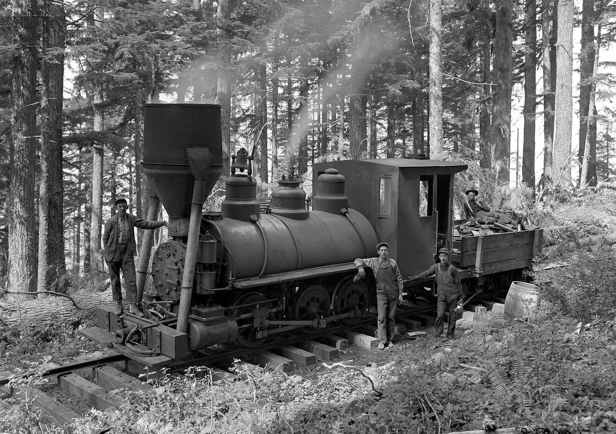
Probably the number one reason I think a lot of players complain about DMs trying to be storytellers is because they just don’t like linear adventures. Again, Matt Mercer might not run his games that way. Most starting DMs learn and a good number of prepackaged adventures are written in a very linear fashion.
It goes Plot Hook (or Quest) -> Encounter A -> Encounter B -> Encounter C -> Final Confrontation -> Conclusion. This is also pretty much the formula for a 5 room dungeon. Of the three encounters, ideally one is combat, one is exploration, and one is some sort of social or roleplaying encounter.. There might also be a puzzle, riddle, or mystery to solve somewhere along the way. This type of adventure lays out exactly like it was placed on railroad tracks and the group’s actions rarely deviate in a way that won’t lead right back to the same path.
Some players go for years with this formula and never complain. It’s great for new DMs to learn the ropes. It’s a super easy way to write adventures, especially starting out. This linear formula starts to break down in different types of settings and campaigns, even at higher character levels, but it’s okay starting out.
Veteran players can sometimes be convinced to go along with a more linear format for an adventure or two, especially when new DMs and players are at the table. Once the players start branching out, though, it’s time for the DM to create a more complicated flow chart or just toss any kind of real format out the window in some cases.
Dungeons are easy to create this way. Linear dungeons usually only have one way in and one way out. Maybe there are some goons to fight or negotiate with. There are traps to avoid, and then it ends in a pitched battle with a boss monster. Collect loot and go home. Easy.
Later, a nonlinear dungeon might have multiple levels with different entrances and exits. There could be different factions of monsters on different levels. Sometimes there’s no one boss monster. Sometimes there’s no loot to be found with the boss. There are even empty rooms for the characters to spend several minutes on trying to find things that aren’t even there.
Players generally don’t like the feeling of being steamrolled by the plot wagon. In other words, no matter what they do, they have to go save the princess or whatever the adventure was that the DM had lined up. Sometimes crafty veteran players will even go so far as to sabotage obviously telegraphed plots. I.E. they’ll save the princess and then hold her for an even larger ransom. Or they might even use it as an excuse to depose a legitimate king.
Welcome to the sandbox.

It’s almost equal parts terrifying as it is satisfying to walk into a D&D session and ask, “What do we want to do tonight?”
What does the DM have prepared? Will the characters look for some sort of adventure or hang out at the inn carousing all night? Will they take interest in the robed stranger sitting in the corner of the inn or go strike up an interesting conversation with the town drunk lying in a nearby pigsty? Will they travel on the road or as the crow flies?
It’s hard to prep any exact adventure if the DM has no idea what the group is going to possibly do next. A DM can prep different parts of the map. He can create a different scenario or event for any given region. It might even be possible to steer the players toward a monster’s lair or a dungeon in various ways, but it’s never guaranteed they’ll go there. In a pure sandbox, a lot of DM prep time can be all for nothing.
However, a good DM will give the characters some stake in what’s happening to their characters. Maybe the town they grew up in is being threatened by an Ancient Red Dragon. Their family and friends are in danger from the Orc brigands because the sheriff has their honcho locked up in jail. A nearby dungeon holds the secret to why the village’s livestock are being dragged off in the middle of the night.
The DM rarely does any storytelling of their own in a strictly sandbox game. They might not have a ton of world-shattering heroics in the group either. If the players decide to let the game world befall the events of a greater scheme by the evil BBEG, then sobeit. Oh well.
The middle ground.
Other wiser DMs than I have figured out a better way to do things. The true path for the discerning DM lies between railroading (linear) style adventures and player-directed sandbox style gaming. I’ve talked before about how it’s a nice common ground and it helps the DM bring the story together while keeping the players’ agency as well as creative license.
If you think my language is a little flowery and dramatic around this subject, it’s because I was a Theatre major for a number of years before switching to Journalism and Sociology full time. I love the stage. I’ve even considered writing a stage play sometime. I’d like to think my love of theatre actually sprang from my love of D&D.
This brings us back to the lead story, as it were. Is the DM supposed to be a storyteller? Are we DMs supposed to be responsible for determining the whole direction of the plot as if it were theatre?
“It’s not Theatre!” they cried.

As a DM, I string together some story elements. I have a BBEG or BBEGs. I have monsters waiting to jump out at the party, sometimes at random. I keep a general chain of events in my notes in the event the players don’t take any of the bait I dangle in front of them. I’m not running the show all by myself in my home games. (*Unless I’m playing solo, but that’s another article for later.)
In my opinion, we’re creating the story together. The players are only as good as the DM, and vice versa. The PCs need a world to interact with every game. The DM can create reams of setting material and characters, but we need players to interact with the worlds we create. It’s truly a symbiotic relationship.
Without players, the DM may as well be writing a novel. If the DM railroads the players into a storyline, they may as well be writing a novel. If the players completely take over the game and the DM’s creative license, we may as well be playing a boardgame or doing improv theatre. (*We all know how I feel about the “no DM” model of gaming.)
My conclusion is simple- WE are storytelling.
The DM is the engineer, and architect who provides a blueprint. The DM lays out the raw materials for something to be built by the group. The players are the ones who make the magic happen. They’re where the story comes together. It’s collaborative storytelling.
There are times, such as conventions and the use of prewritten modules where there is still a very linear style in play most of the time. DM’s have about three and a half hours to make the magic happen before their time is up. (*And conventions wonder why I ask to be on my own table the whole time. That way the group who has the table next isn’t breathing down my neck.)
Sometimes the DM just needs to wing the module over their shoulder and just ask the group what they want to do during a convention game. It’s just not worth trying to shoehorn the group into a prewritten plot if the players aren’t into it. We can still have a great time, just not the module as written.
That’s probably a good note to leave this discussion on. Being a DM carries with it a sacred trust. Sure, it’s “our” game as DMs. But that game isn’t going anywhere without players and their interesting characters to keep it going. I know some DMs will probably take exception to the way I stated this, but it’s my game and my table. I can’t tell anyone how they should run a D&D game.
Thanks for stopping by. I appreciate you making this a part of your day. Keep gaming! Have a great weekend.


