
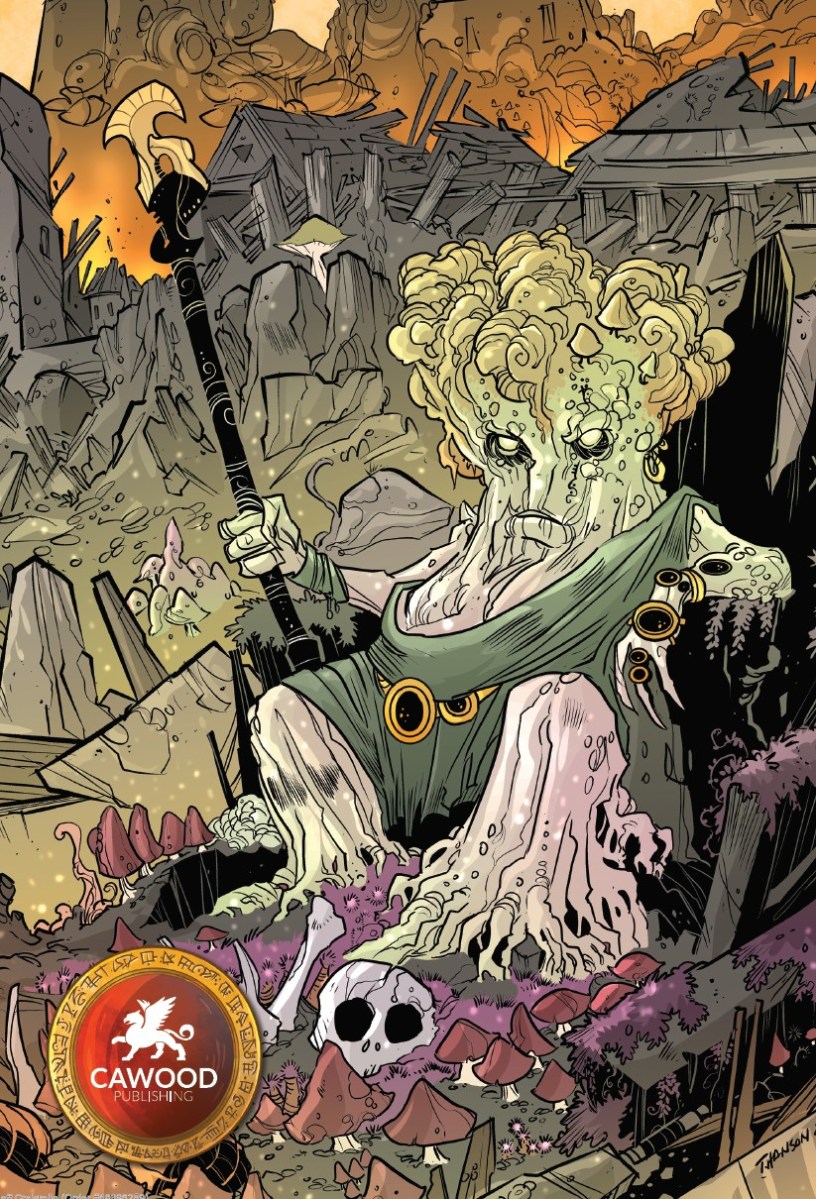
By Cawood Publishing
You can find the adventure on DriveThruRPG.com at this Affiliate link. Buying through my Affiliate link really helps my own efforts quite a bit. Thank you!
Disclaimer: Andrew Cawood was kind enough to provide me with a free PDF copy of this adventure for me to review. However, I backed the Kickstarter, so I had it on hand and was planning to review it anyway. Long story short it all worked out, and I have not received any other payment or compensation aside from the PDF review copy.
Cawood Publishing’s The Fall of Rivenhelm is a masterclass in adventure design that balances high-stakes drama, evocative world‐building, and modular mechanics to accommodate any play style. From the very first pages, Andrew Cawood establishes both continuity with Rise of the Mushroom King and the freedom to run the sequel as a standalone epic. The adventure’s opening “Adventure Overview” section lays out clear goals: rescue the besieged queen, reclaim the castle, and stem the tide of an otherworldly invasion while still leaving plenty of space for a GM’s own creativity.
One of the module’s standout features is its three‐tiered difficulty framework. Each encounter, including those in the ruined Docks District, the flooded Slums, and the shattered halls of Hart Castle offers “Low,” “Mid,” and “High” options keyed to 1st–4th, 5th–10th, and 11th+ level Dungeons & Dragons 5E parties respectively. This elegant approach not only streamlines prep for GMs of varying experience but also ensures that high‐level campaigns feel as pulse‐quickening as the low‐level forays through the river‑choked streets.
The narrative pacing is equally masterful. Early scenes on the Hart River set a tone of urgency and wonder, sunken ships, mushroom‑infested waterways, and desperate NPCs clinging to drifting barrels while the 2d20 Rumor Table (p. 13) offers evocative hooks that can propel the party down unexpected alleyways or into surprising alliances. By the time the heroes reach Hart Castle’s shattered gate, the sense of a city literally sinking beneath the soil and the creeping dread of fungal corruption has been fully established.
I love how this adventure feels less linear in a lot of ways and leaves tons of worldbuilding out there for the players and GM to explore in the World of Myrr while retaining the city as a sort of home base. It really expands into the Myrr world book and monster anthologies quite nicely. All of the creativity and encouragement poured into this module is truly inspiring.
Cawood’s Game Master Advice section (p. 9) is short but potent: it highlights multiple paths to key objectives, suggests ways to weave in dark‐spore effects for flavor or challenge, and offers guidance on integrating the new Monster/NPC roster smoothly alongside familiar foes. This level of GM support, concise yet comprehensive, underscores Cawood’s understanding that a great adventure should feel like a collaborative canvas, not a rigid script.
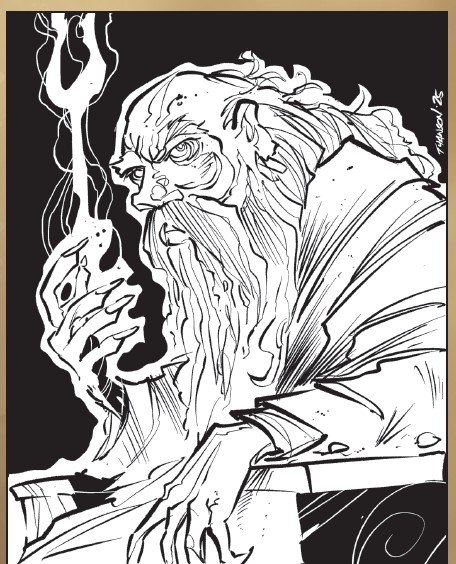
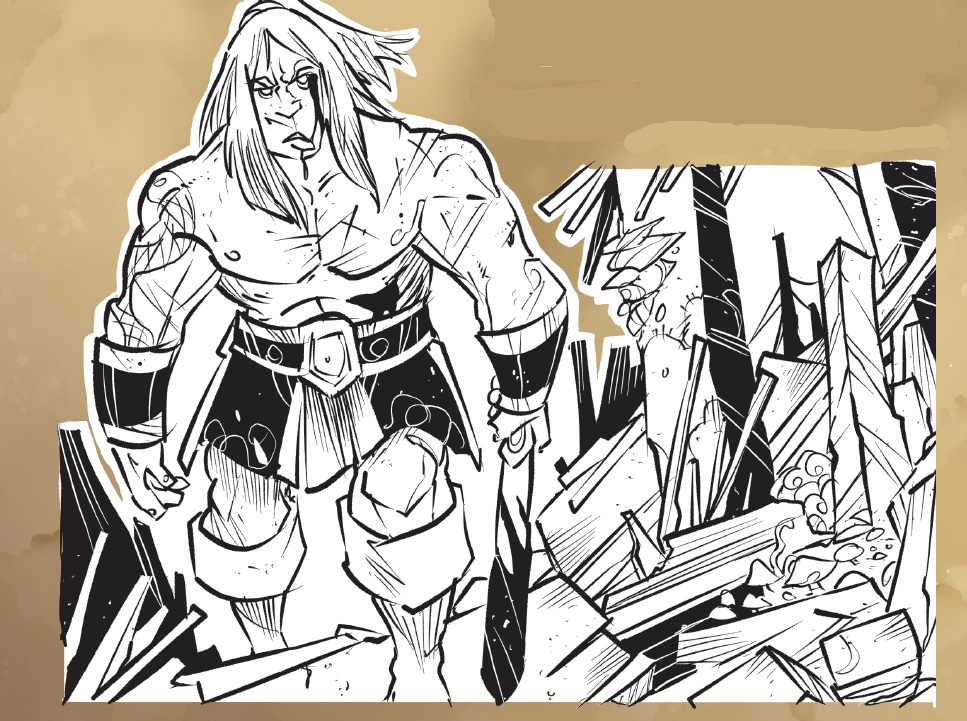
Of course, no review would be complete without celebrating Travis Hanson’s illustrations. Hanson’s comic‑inflected style dances effortlessly between horror and whimsy: grotesque infected ogres and mushroom soldiers bristle with menace, while moments of gallows humor (a cow mooing amid amphitheater ruins, for example) leap off the page. His artwork doesn’t just decorate; it amplifies the module’s tone, giving GMs vivid imagery to share at the table and helping players feel the eerie balance of dark fantasy and sly humor that defines the World of Myrr.
Mechanically, the inclusion of conversion tables for OSE, DCC, and two editions of Pathfinder.(p. 70) demonstrates Cawood’s commitment to accessibility. Whether your table leans toward streamlined old‑school rules or modern crunch, the plug‑and‑play stat blocks and treasure tables minimize friction and maximize gameplay flow. Likewise, the extensive appendices—new spells, magic items, and encounter tables—provide immediate inspiration without overwhelming the core narrative thrust.
In sum, The Fall of Rivenhelm is a triumph of modular design, atmospheric storytelling, and striking art. It honors its predecessor by expanding the stakes and deepening the world, yet remains fully playable on its own. For GMs seeking an adventure that marries horror/comedy/fantasy tone with robust mechanical support and for players eager to face a sprawling, spore‑infested siege this module earns my highest recommendation.
Thank you for being here with me today. I appreciate you. Keep it real, but please strive for positivity, too. Please embrace the things that bring you the most joy in your life.

 Jeff's Game Box