
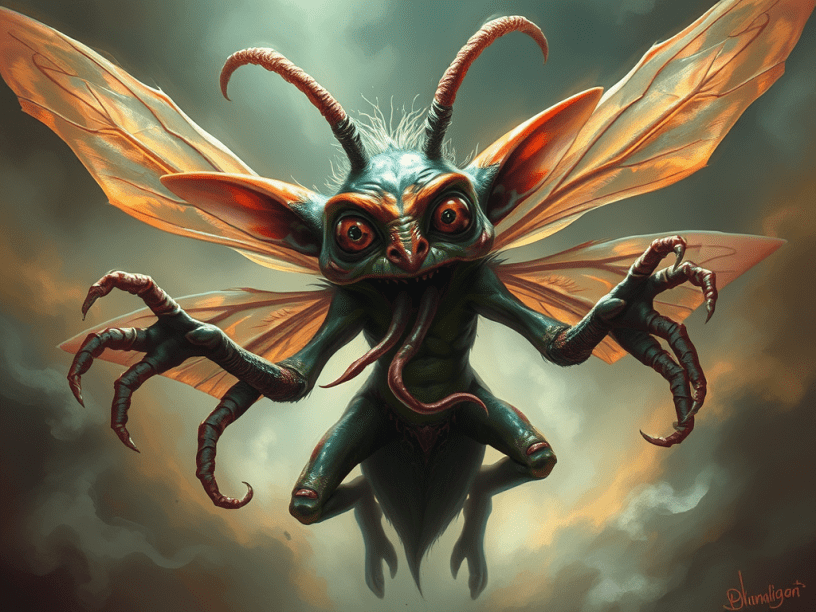
AKA Kitbashing On Paper.
Back in my Warhammer 40,000 days I had a Bitz Box full of extra parts leftover from building various minis. (I played Orks, so it was customary to tack a z onto the end of words instead of an s.) ORKAMANIA, Brother! Waaaagh!! What’cha gonna do, Brother? (Had to get that out of my system.)
The Bitz Box was useful for Orks and my WH Fantasy Undead for making certain models unique or more interesting. Orks were known for adapting gear and vehicles from other armies. Undead in Fantasy could be risen dead from literally any other living army. (Originally, anyway. SMDH Games Workshop. Grumble, grumble, grumble.) The process was known as “kitbashing.” Taking various bits and greeblies from every other sprue in the game and making some sort of freakish new model from it. In some cases we were also making minis that Games Workshop didn’t make but had put in the Codex. There were no 3D printers back then.
How does this apply to fantasy TableTop RolePlaying Games?
When making monsters, you can take a few bits of Monster A and add them to Monster B to make a whole new frightening monstrosity to chase your Player Characters around.
We’ll take a run-of-the-mill Goblin for example.
Merle (the Goblin): Who, me?
Let’s pretend some half crazed Warlock/Necromancer/Alchemist comes along and captures poor Merle for some experiments.
Merle: Ack! What?!?
Bartus (Warlock/etc): Hold still. This probably won’t hurt much. Glad you’re tied up.
POOF! Zot! Smoke fills the room briefly as Merle is transmogrified.
Merle: Strange. I feel fine. (Looks down) My thorax kind of itches a little. Mind scratching that for me. Never mind. I’ll get it with one of my bee legs that isn’t tied up. Wait? Was I like this when I came in?
Bartus: No. You have been transformed into a Goblin Hell Wasp. Congratulations.
Merle: I’m half Wasp now? Like a centaur with waspish bits? Uh, neat. Where does the “Hell” part come in?
Bartus: Wait for it…
Merle: (sprouting four shadowy tentacles from his midsection) Oh. Time to undo these pesky manacles. (Flutters his wasp wings, unshackles himself.) See ya later. Off to cause mayhem. Thanks, buddy.
Bartus: Don’t mention it. Specifically don’t mention me. Have fun.
Merle: Oh, buzz, I will have fun. Buzz. (Flies out the open skylight.)
Poor Merle is just one example of how bits can be added to a monster. The sky is literally the limits on what a Game Master can do. Dire badger with a couple of skeleton arms sprouting out of its back? Who would do such a thing?
The more vanilla version of this, of course, is just to give ordinary creature or NPC new shinier weapons and armor. Take Merle’s cousin Earl for example. Bartus walks up to him with a bag full of armor and a katana with an ominous aura. Bartus says, “Give me your rusty shortsword and leather armor and I shall grant you the power to smite your enemy.”
Earl, looking puzzled, strips off his armor and hands over his trusty old sword. He dons the black full plate armor as it conforms to his cute little goblin body. Then he unsheathes the katana to admire the glowing sigils all over the blade. “Hey, this is pretty sweet. Thanks,” he says gleefully.
If Bartus wanted several loyal minions he could raise an army of Deadites. (Half demon, half zombie or skeleton.) Then he could ditch the rusty armor and weapons to give them better gear. Think of how skeletons with plate armor and halberds might change up a battle with the BBEG. (Bad Bartus Eccentric Genius.)
Or worse, six armed Deadites with cursed daggers in each hand. Four armed Deadites dual wielding crossbows as backup. Maybe throw in a couple of bat-winged Wights with scythes for arms. (Like hooks from that one D&D monster I can’t name for copyright reasons.) The possibilities are endless. Why ever use ordinary minions again?
Seriously, some of the best creatures in Dungeons & Dragons are mashups of fairly normal animals or monsters. I’ve done this sort of thing for Monster Mondays a few times now. Check out the Bewalopus as an example. Bear + Walrus + Platypus. Link to that article here.
A cautionary tale.
Game Masters, please be aware that modifying and adding extras onto any monster has the potential to change up how much damage it can deal to the party. Even adding on a new weapon and armor could alter the amount of challenge presented to the PCs. Cannon fodder troops such as goblins and kobolds become formidable if equipped with poison and/or paralysis damage. A horde of short viper-kobolds sounds like fun on paper right up until they cause a TPK.
In terms of most d20 based games, it’s probably wise to bump up the Challenge Rating of the monster to reflect its newfound capabilities. If you’re playing a game without such conveniences, please consider rewarding the group with extra loot and/or experience to reflect surviving such difficult encounters. After all, it’s got to be worth the PCs whiles to overcome such excruciating circumstances.
Another thing I strongly recommend is watch out for certain game breaking abilities. Creatures that can fly, burrow, become intangible, teleport, or cast spells can become overwhelming fast. Players will likely become frustrated if they encounter too many modified enemies that seem impossible to defeat. One or two of the more challenging monsters is fine. Every other villain or monster being able to teleport, regenerate, or whatever else could easily get on the party’s last good nerves.
It also doesn’t hurt to consider adding a vulnerability to monsters to keep them from being to powerful. Maybe those moth wings on the back of the orc shaman came with a vulnerability to fire and an irresistible attraction to bright light. Perhaps Merle’s shadowy side left him vulnerable to holy attacks or banishment like a regular demon. It’s up to you, GM, to provide whatever balance you feel is fair.
I wish you all the best making monsters your own. I find it to be one of the most rewarding parts of the hobby. I think it’s also a great deterrent for players who think they know everything there is to know about the monster in question. It’s also fun to use things the group as never seen before.


