
Big rule of Game Mastering: No plan ever survives contact with the Players.
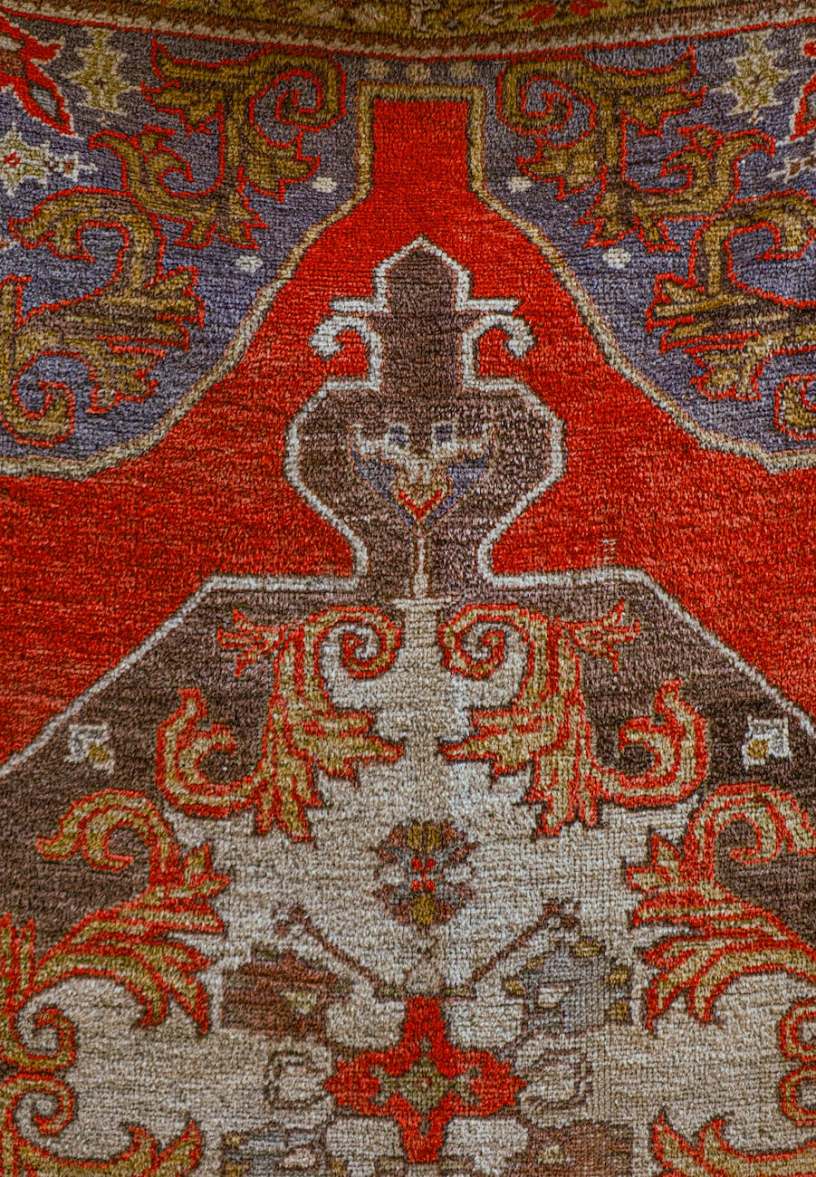
The challenge becomes figuring out how much to build in any given direction. I recently created a magic item that will change up how distance and speed are relative to worldbuilding. My flying carpet is going to become the equivalent of the legendary Gygax Ring of Teleport incident.
For those unfamiliar with the aforementioned incident, Gary Gygax rewarded one of his Dungeons & Dragons players with a Ring of Teleportation and it had line of sight range, as I recall from the story. Soon after the character with the ring decided to climb a mountain and ask what could he see. Another mountaintop? Cool. “I teleport to it.”
Suddenly whatever plan Gary thought he had was moot. One of his players was going to hop around the map and keep exploring using just that one item. I’m a touch concerned that if my characters manage to find and figure out the Flying Carpet, that I will rapidly run out of established hexes. What can I do?
This pretty much takes the campaign mode from local to national overnight.
There’s not much point to populating each hex with more than terrain if they’re going to fly right over the majority of it. Theoretically flying in the dark wouldn’t be too safe, so they’d have to land at dusk. They also have to eat, sleep, forage, and shelter.
That’s also presuming fair weather. Being on top of a flying carpet with a max altitude of 100 meters in a thunderstorm is probably not too safe. Not to mention pesky lightning or snow, sleet, and possibly ice. Would I have to create weather patterns over the top of the map, too? Oof. That’s a LOT of work.
Still if the group can cover about 10 times five kilometer hexes (50km total) per Shift on a clear day and travel for at least 2 Shifts, they’re suddenly not in Kansasia anymore. That’s a hundred km from where they started and I really have not planned that far ahead yet. How do I do this from a sandbox perspective without driving myself nuts?
Airborne encounters would slow their roll a bit. Dragons, manticores, insects in any size, rocs, hippogriffs, griffins, and even some kaiju might take an interest if they see something else in the air in their territory. In our last worldbuilding article we talked about entire hexes populated from above as well. I don’t suppose some of them would like just anybody flying up to their settlement.
Alternatively, I could just not give them the item…
I feel like they would be getting robbed of a quest reward and it still doesn’t solve the problem. Eventually they are going to find mounts. It might be a “regular” horse (possibly six legs) or a Crumpleback Isopod. Any way you slice it, their movement rate might go from one or two 5km hexes through various terrain types to 30km or more depending on the mount. That’s going to kick worldbuilding to keep up with them into overdrive.
The flying carpet is intended to be a quest reward for a pretty big event. It’s not something I would hand out on a random table, unlike a Ring of Teleportation. And best believe that ring would have serious limitations in my world. Not to mention if the heroes have one, so do the bad guys (possibly.) The same notion goes for the carpet.
There are also some personality quirks with the carpet. The thing has a mind of its own at times. It won’t work in the rain. If someone tugs on a loose thread it rolls itself up even in midair. It won’t tolerate dirty shoes or muddy boot being dragged onto it. The thing might just want the day off and refuse to fly. It’s more or less indestructible, so it can’t be threatened with fire, but it has things it prefers to avoid. It starts developing attitude issues if something is spilled on it, especially if it is stained.
The opposite is true, too. If the group cleans, cares-for, and maintains the carpet as they would a precious real world rug, then the Flying Carpet soon becomes their best friend except in the conditions mentioned above. But if the group is nice to it, the carpet will be nice back. I don’t think that’s too much to ask.
The worldbuilding has to jump leaps and bounds, however. It was going to happen eventually. I may have to break down and create a macro sized map of the entire planet. That’s a lot of mapping.
The world that I’m building was intended to be about six times the size of Earth.
I wanted a Jovian planet. I wanted a planet so big the characters might think it’s just a flat plane instead of a globe. This way characters could adventure for weeks and never run into an ocean. Here’s a secret about me: I don’t like aquatic adventures. Yet we have Mariners in Dragonbane.
I prefer to think of the Mariner profession as more of a swashbuckling rogue than a sea captain in the world I’m building at least. As-is, I am working on some quests for an upcoming project that do involve a bit of sailing or at least ocean travel. If anyone has a Mariner, it will be as good a time as any to pull one out. But in general, the Mariners in most of my Dragonbane games are landlocked. Sorry. Maybe I should just toss in a different profession instead.
The conclusions I finally came up with.
So here’s where the whole thing snapped into focus for me. I don’t actually have to out-map my players. I don’t have to build every hex from here to the local moon. I just have to build enough for them to feel like the world is real, even when they take a hard left into the unknown. Flying carpets, teleport rings, six-legged horses, giant isopods, whatever. They don’t actually break the game. They just break the illusion that I’m in control of it.
That’s fine. I don’t need control. (Wow. Did I just go there?) I need momentum.
The trick, at least the one I’ve settled on, is to think in layers instead of hexes. The top layer is the stuff I actually prep. Landmarks. Cultures. A handful of named peaks, a ruined monastery on a cliff, a waterfall that hides something older than the continent. The second layer is the stuff I can improvise with confidence. Wandering monsters. Weather turning ugly. Forgotten watchtowers. A Roc who really wants to know which tiny morsel is flying through its territory. The third layer is the deep world. Politics. Factions. Old gods. Strange signals beneath the ground. All the things that exist whether the players ever find them or not.
If the party flies fifty or a hundred kilometers away, they’re not escaping the map. They’re just peeling back a layer I haven’t drawn yet. I can work with that.
The flying carpet itself buys me room. It’s temperamental. It doesn’t like the rain. It folds up on people who tug the loose thread. It gets grumpy if someone tracks mud across it. It has boundaries. A flying carpet like that isn’t a tool, it’s a character. And just like any NPC, it has needs, wants, moods, and limitations. Their movement rate goes up, but their reliability goes down. That’s good for me. It keeps the world grounded.
So instead of trying to draw the entire Jovian super-planet at once, I can design obstacles and speed bumps that feel organic rather than punitive. Weather patterns that roll in without warning. Airborne predators who don’t take kindly to travelers. A ruined sky-temple that shows up only on clear days. A distant city where flight is forbidden because their last airship catastrophe is still fresh in cultural memory. Two thousand ways to slow a party down without ever saying no.
What I’m really doing is managing curiosity. Not limiting it. Guiding it just enough that I’m not scrambling every single time they decide to push the horizon a little further.
And yes, eventually I’ll have to make the big map. The continental one. The planetary one. The version that proves this world really is six times the size of Earth and nowhere near as nautical as the rulebook thinks it should be. But I don’t have to finish it before the players touch the carpet. I just have to know what the next ring out looks like, and the one after that in broad strokes. That’s enough to sell the illusion that I always knew what was out there. Even when I didn’t.
That’s the secret, honestly. Not planning ahead in strict detail. Planning loosely enough that whatever the players do still fits. The world isn’t a script. It’s a conversation. Some days the players talk first. Some days I do. Some days the flying carpet refuses to lift off, and that’s part of the story too.
So no, I’m not taking away the quest reward. They earned it. If anything, the carpet is going to make the campaign bigger, stranger, more alive, and way more fun to write about.
Thank you for being here with me today. I appreciate you. Keep it real, but please strive for positivity, too. Please embrace the things that bring you the most joy in your life.

 Jeff's Game Box