
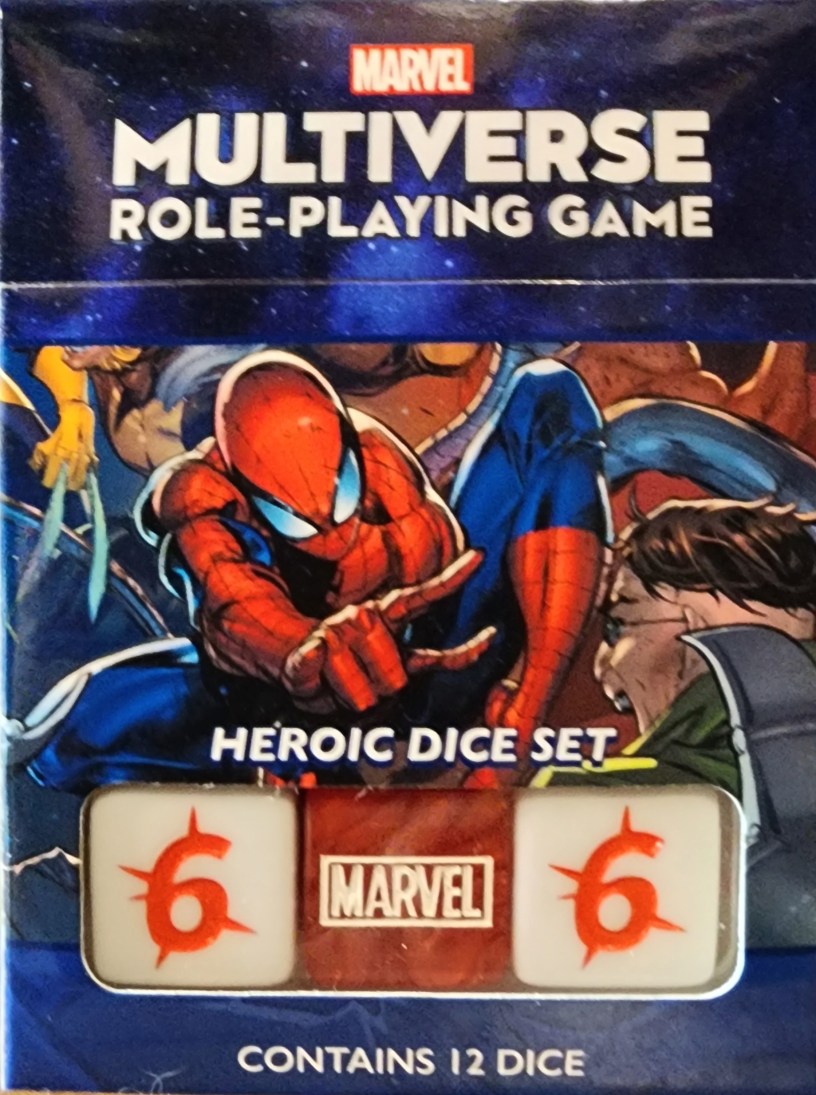
I don’t think there’s a variation of D6 rules I haven’t seen.
I understand the simple six-sided die is probably as common of a household artifact as we’re going to find for gaming. These things have been around since ancient times, a lot longer than the dodecahedron or the octahedron. Even our old friend the caltrop, aka the d4, would have been a little harder to come up with back in those days.
So, commonality is why these cubes are so prevalent in TTRPGs. I could find d6s in my mom’s Yahtzee box or raid Monopoly. D20s? Uh… I had to go to the big city for those or order them by mail back in 1983 Podunk Iowa. The d10s for Marvel RPG were likewise difficult.
Homebrew insanity aside, my first real D6 system was West End Games’ Star Wars RPG.

I remember when my copy of Star Wars RPG First Edition arrived. I stayed home from school just to stalk the UPS driver. I ordered the RPG and The Sourcebook together. I was over the moon in love with this game from the moment I heard about it.
The system is really simple. The GM sets a target number. Player rolls D6’s corresponding to the relevant attribute or skill. All dice totaled higher than the Target Number? Success. Lower than the target number? Fail. They added the exploding 6 mechanic later.
I LOVE Star Wars RPG! I slept with that book under my pillow for over a year. I can’t get enough of that game. I’d run it over AD&D, Marvel, DC Superheroes, or anything else. Even now if I had players that really wanted to play bad enough I’d be tempted to dig out the old books. I still love the D6 system from that game.
Shadowrun was a unique system with a lot of merit.
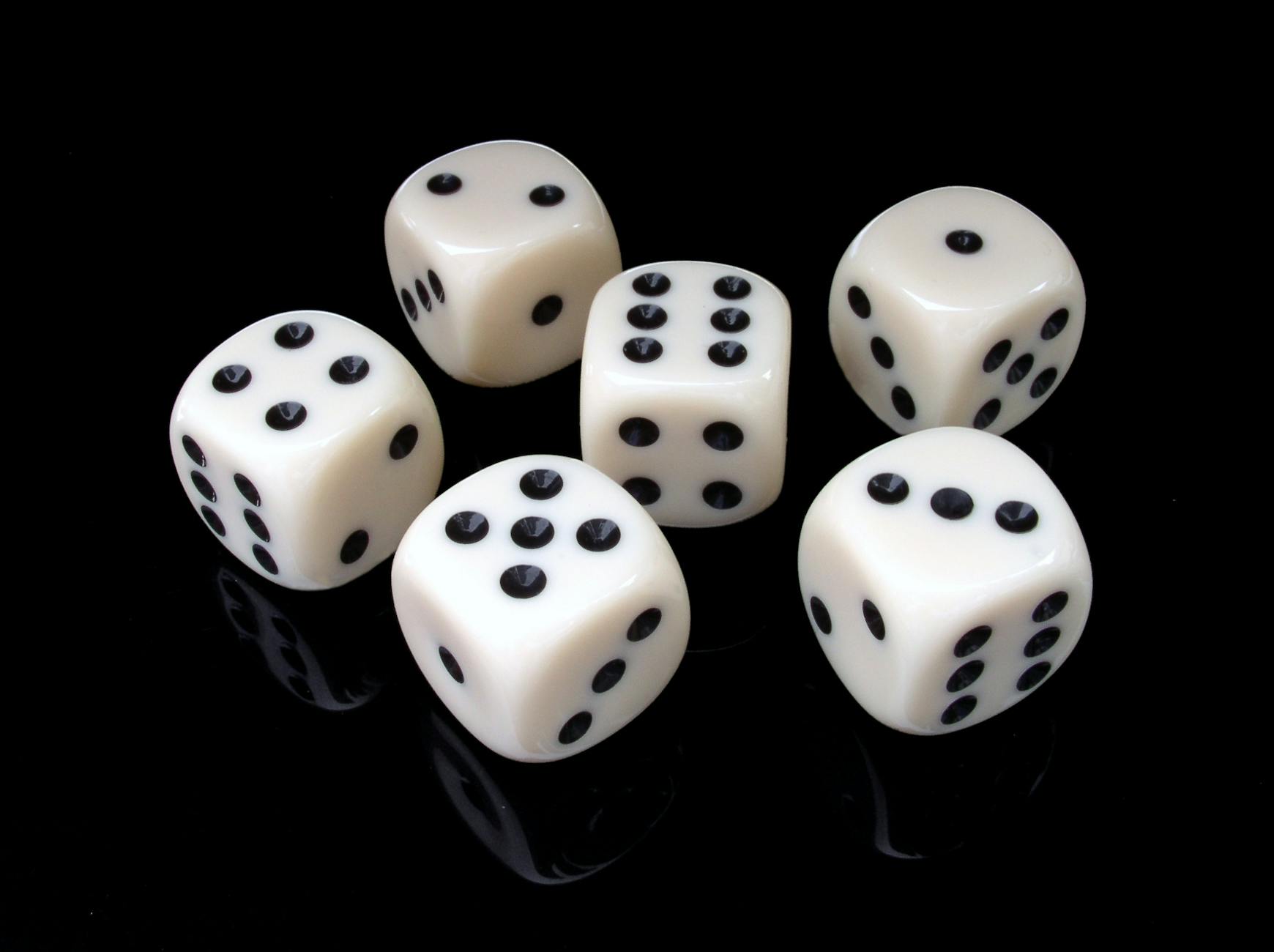
The system changed a little between editions, but basically it revolves around d6 dice pools vs Target Number and number of successes on the dice. I have mixed feelings about this system because I’ve seen it do cool things and horrible failures. Not to mention I’ve had multiple character fatalities in this game. (*Not as much to do with the system as much as my own bad decision making.)
This type of dice pool system has carried over to other games and other sizes of dice. The Target Numbers might become static, everything hinging on numbers of successes. I’ve also seen variations on the size of the pools, limits, etc.
Champions (HERO) has a good system.

This game is a classic upon which other superhero games would follow. 3d6 added together roll under. Again, different editions had different variations on this. Some used roll X number of d6, pick the best, roll under. Champions is still regarded as one of the best RPGs of all time.
I have bad luck with roll under mechanics in general. I’m almost superstitious when it comes to boardgames such as Axis & Allies. (Not an RPG.) For whatever bizarre reason, I once had a d6 crumble to dust playing a roll under system. It was freaky. I think we’re just used to rolling high instinctively.
I’ve always felt the 3d6 added together was a bit clunky. There are definitely other systems I like better. The curve on 3d6 is… awkward to work around at times. Everything else in Champions runs very precisely. I think it would be better served by a percentile system.
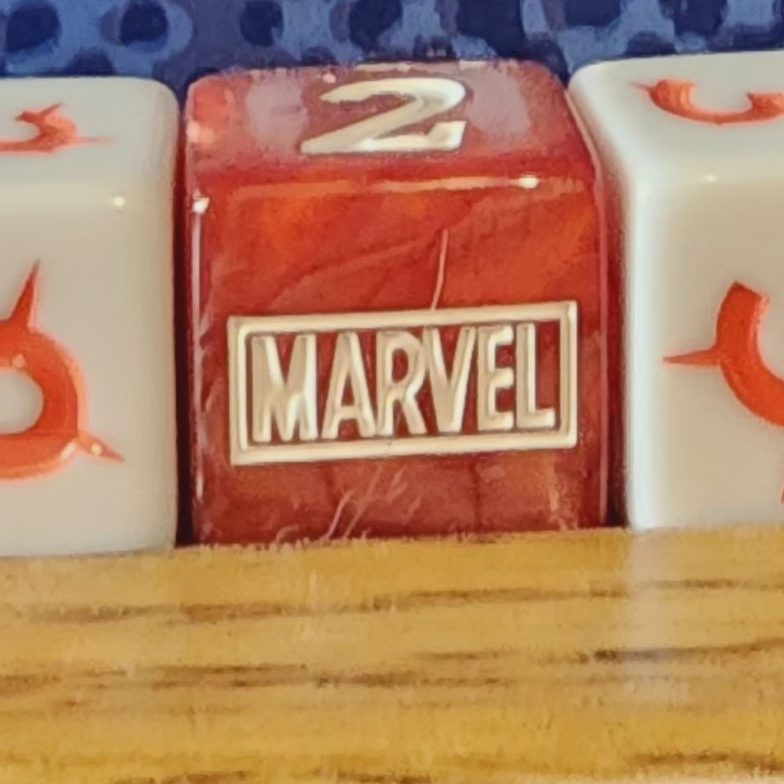
The new Marvel Multiverse RPG runs off of a somewhat modified 3d6 system. The Marvel 616 engine hinges on a special Marvel die with a logo in place of the 1. Otherwise, it’s a lot like Champions had a baby. I’ll probably do a review one of these days once I’ve had a test run of the rules.
Then FATE/Fudge came along.
How to play FATE without the trademark dice: Pretend 1-2 are the minus, 3-4 are blank. 5-6 are plus. Get more pluses than minuses. Success! Everything else is modifiers and flavor text.
I love FATE as a game system. It’s a great rules lite system. The books and dice are pretty easy to come by. It adapts well to every genre I’ve thrown at it so far. We’ve gone so far to gut other games of their rules and replace them with Fudge. It works great. Essentially it is still 4d6, though.

Moving way forward.
Blades in the Dark is a game Powered by the Apocalypse system. Blades’ system, Forged in the Dark, is becoming the preferred set of mechanics for many game designers these days. Pick your Move, GM gives applicable skills/traits. Roll however many d6s (Usually 0-6 dice) and pick the highest die. Moves are a broader set of mechanics than a lot of old-time RPG players and GMs are familiar with. I think a lot of Blades’ fanbase comes from people disgruntled with Dungeons & Dragons and other d20 based systems.
I like PbtA/FitD for the simplicity they provide. They avoid a lot of the swing-y back-and-forth combats or sneaking around rolls in other games. It gives me a lot of freedom of description as a GM. I really like it for Monster of the Week because of that narrative freedom. I think it’s also harder to kill off a player’s character outright in that game (unless the player is narratively cool with it) instead of the GM just getting a random crit.
Then there’s EZD6.

I couldn’t go without mentioning the literally simplest TTRPG mechanic and fastest playing game out there today. Roll a D6. Beat the difficulty rating between 2 and 6. (1s auto fail.) That’s basically it. From there we could get into Boons, Banes, Hero Dice, and Karma, but the d6 roll stays the same.
There’s a reason it’s called EZD6. Tell the Rabble Rouser what you want to do. Okay. Is there any reason your character would be skilled at doing this? No? Roll high. Yes? You can probably get away with rolling a little lower. This game has the most rules lite, easily portable book you’ll ever love. I can use this game any day of the week for any genre.
There’s a “but” coming. I think the d6 is kinda… dull. I can easily take the same mechanics and make it EZD10 or D12 or Deathbringer. Professor DM rivals DM Scotty in terms of game design. Both games are equally awesome. I just like dice beyond the cube for my simple game.

This is why I cringe when I see a game runs on d6s.
I’m trying not to sound like an old Grognard pessimist here. When I see a game runs off of a d6 mechanic, I really say “Been there. Done that.”
Seriously, it’s hard to come up with a d6 game system that’s going to totally revolutionize the way we play TTRPGs. It’s not that I begrudge designers the use of the most common die in the world. I feel like there’s a lack of originality when I see all d6s. Not to mention I can run OG Star Wars out of my head without a rulebook along with a lot of other d6 games.
However, we do have lots of wonderful artisans on Etsy and all over the Internet making these gorgeous 7 or 11 dice sets. I like keeping them in business. I love my math rocks.
Imagine how hard it is to cut a d12 out of solid rock. D6s are easy. Gambling dice manufacturers have been doing it for years for the casinos. I own half a dozen laser cut casino dice. I love em. But a precision cut d12 or d20? Forget it. I can’t afford that and still put shoes on the kids.
Yes, I’ll still happily run a d6 game. EZD6, Star Wars, ICONS, and FATE all still sit in very high esteem upon my shelves. My favorite game is literally a d6 mechanic game– ICONS. It’s all about the narrative freedom that comes from simpler rules.
Thanks for stopping by. I hope your dice roll well no matter what system you use. I appreciate you!


The west ends games Star Wars is the best, something about the D6 system really fits with Star Wars specifically for me
LikeLiked by 1 person