

We didn’t even get into fantasy games with multiple character career options.

It’s the other side of having a minimal number of character classes. Games such as Warhammer Fantasy RPG and Fabula Ultima TTJRPG have an advancement system different that what we’re used to seeing in various D20 Fantasy games.
I recently became interested in Fabula Ultima but it’s character creation system threw me for a loop at first. I compare it loosely to Final Fantasy (the first one because I’m old.) Final Fantasy had a starting career such as Fighter and after a certain level you moved onto Warrior.
Fabula Ultima, (Which I refuse to abbreviate, btw.) takes character careers to a whole new level. Players choose two or three classes at character creation and distribute 5 levels between/among them. Each class comes with its own benefits and free skills. Talk about dipping a to into several pools at once.
Warhammer Fantasy RPG takes things in a different direction yet. Classes are an overarching category with eight careers each. Characters can max out their career or simply jump to a new one within the same class. Each advancement or change is not without an XP cost.
In the first article of this series, we focused mainly on D20 games such as D&D.
I’d like to use this opportunity to remind everyone that Dungeons & Dragons is a fine game, but it is not the only game in town. I think we’ve been spoiled over the last ten or so years by D&D 5E and its way of doing things. I think we have forgotten that there are an immense number of games outside of D20 fantasy.
D&D ranges the gamut between old school basic classes to 5E and its subclass/multiclass zoo full of specialists. It depends largely on what you want the character to be able to do in the game. Fighters prove that any stooge can swing a sword well while a Hexblade Warlock can magically smite things with the best of them while still serving an Elder God or some other evil tentacled nightmare.
In the overly dramatic end of the pool of 5E, characters tend to start out powerful and end way more powerful. Critical Role has taught us that D&D characters don’t have to go from zero to hero when they can just start out ridiculously powerful. The Legend of Vox Machina animated series might be a bit overexaggerated for Hollywood purposes, but it also exemplifies just how broken 5E characters can get.
Back in my day, our characters started out humble, and we liked it!

You only had to play a Level 1 Magic-User in Basic or AD&D to wonder how in the heck guys like Elminster, Mordenkainen, Rary, or any of the other big names made it to Level 2, much less 15 or even 20. It usually meant starting out with 1 hp, Constitution was your dump stat, and hiding behind other characters more than fighting. A Level One Magic User could stumble on the stairs and instantly return to character creation.
One of my pet peeves of the D&D advancement system was always the seeming lack of respect Level One characters would receive. I like the way other TTRPGs handle it better or at least differently. I mentioned Fabula Ultima earlier as an example. In that game, characters might start out young and inexperienced, but are usually treated the same way by those around them until their amazing exploits start becoming well known. It’s a very player character centered game. It’s a good approach, honestly.
Some games handle reputation as an altogether different stat. I applaud that notion. It’s one more way to make the character’s words and actions matter as opposed to level or career.
I don’t hate 5E as much as I love the way other games do the same thing.

I debated about bringing Kits from 2nd Edition AD&D over to Shadowdark RPG. (If anyone does it, you heard it here first. *wink*) It’s something to add onto a basic character class to make it a little more special. I think this is especially helpful to the Fighter type characters in any game, but maybe not as remarkably useful or broken to other classes.
I was reminded on the Shadowdark Discord, however, that Kits aren’t really the Old School feel that game is trying to emulate. My only intention is to try to break away from the same old, same old way of doing things the way they’ve been done for the last 50 years. I would actually like to get away from the standard European style medieval fantasy altogether. Several games are doing just that.
I am pushing for an all new alternative to Old School or even New School.
Alternatively, I may just follow in Kelsey Dionne’s (Arcane Library’s) footsteps and just write my own game one of these days. I’ve talked repeatedly about how the D&D team should probably be sacked so they can get fresh talent working on the game. (No worries, Jeremy Crawford and Chris Perkins should have an easy time finding jobs with other companies.)
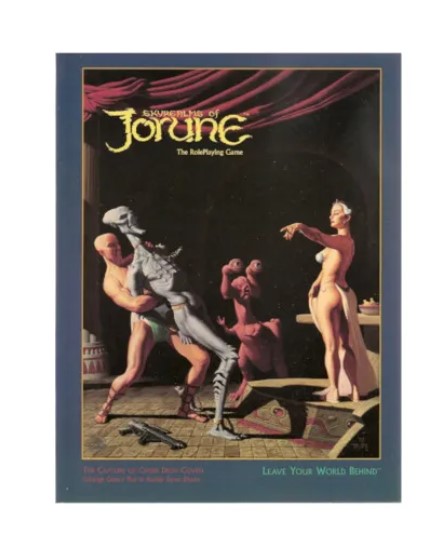
I’ll elaborate even more about this in a future article, but I really think it would be neat to create a world where none of the old ancestries (species,) classes, archetypes, spells or even weapons exist. The only trick is doing it without the whole thing turning into Skyrealms of Jorune. I want to avoid having to create special nomenclature for everything in the game to the point where it is unrecognizable.
I’m still a believer that some structure is good.
As much as I kinda dog on D&D, I will say it provides a nice framework for players and DMs to build on. That’s why I’m leaning on Shadowdark right now a little bit. I want to get my feet wet designing for a game with a friendly community and a good take on the Open Gaming License. This approach as actually inspired by Taron “Indestructoboy” Pounds created several 5E classes before branching out and making Vagabond RPG.
The great WotC D&D OGL Debacle of 2023 has inspired a great many creators to start doing their own thing. I think this is wise and also healthy for the sustainability of the TTRPG industry. We needed a flood of new ideas into the space to really get the juices flowing.
I’m simply proposing that we keep ancestries, classes, and so on as a notion in the hobby. I might even be inclined to keep the attributes, skill checks, and combat concepts that most of us are used to at this point. I think some degree of structure is a necessary animal to provide frameworks for new players to learn and grow in.
I just want to create a world where we won’t need to specialize and multiclass constantly trying to emulate a specific concept such as bounty hunter or shaman.
I also want to make a world/setting where we’re staying the same occupation at first level as we are at 20th level without a bunch of jumping around. There’s a lot of work ahead to accomplish all of that, however.
Thanks for being here. Have fun with whichever game you prefer, however you prefer to play it. I appreciate you being here.

 Jeff's Game Box