
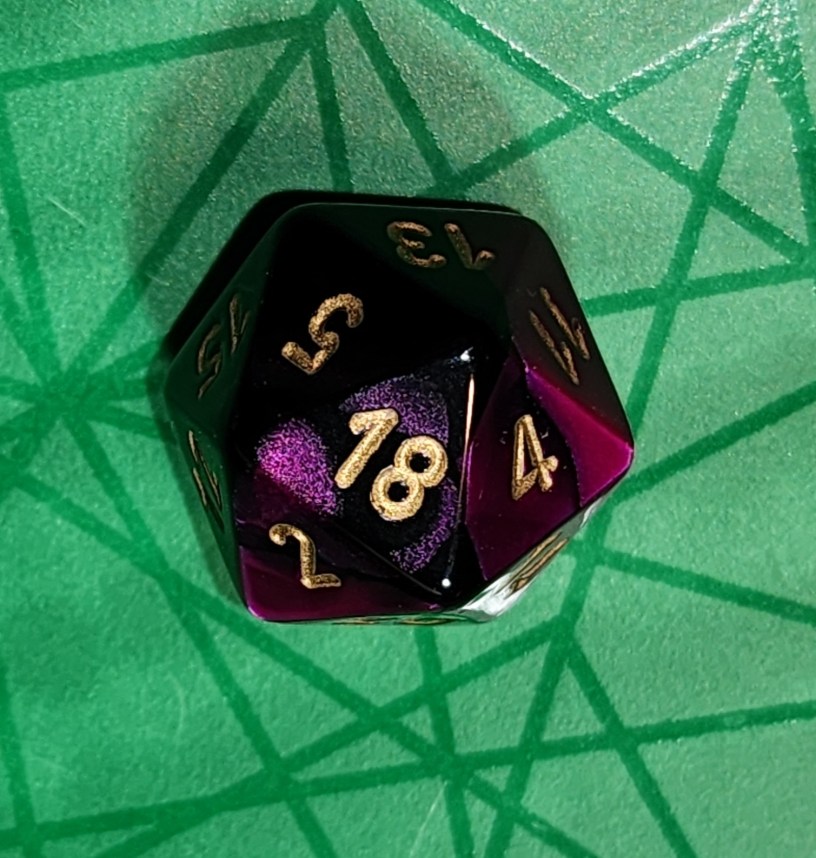
Further defining what makes a game company independent.
This question was posed recently on social media. What is an indie TTRPG? What makes a game independent?
A bunch of us chimed in trying to answer this question, and the basic consensus was “anything not owned by a ‘big’ corporation.” Since TTRPGs started as a small cottage industry, and for the most part still is, there are hundreds of indie TTRPG companies out there. Heck, even the mighty Dungeons & Dragons was once a small group of wargamers in a basement printing pamphlets at one time. But, as capitalism would have it, not all companies stay small for long.
TTRPGs are a growth industry, and have been for over 50 years.
We’ve come leaps and bounds since the days of small enterprises using the company photocopier to make enough copies of the game for a dozen local players. The days of having to explain the game to a club full of historical wargaming grognards in the vague hope six of them will want to play are long gone. (Thankfully.)
DriveThruRPG.com and Itch.io have made it possible to put out small rules lite TTRPGs for little to nothing up front. TTRPGs are still a cottage industry with lots of room for growth. It’s no longer a battle for use of the photocopier or a struggle to pay a private printer just to put out a pamphlet full of rules. Sure, some of these indie games are rules lite, one- five page games. PDF, E-Pub and other electronic options have made it ridiculously easy to self publish.
Quality, yay value is what you make of it.
I love rules lite games. I’ll review, play, run, maybe even supplement them all day. A lot of these games can be a page or two of simple rules. It doesn’t make them better or worse than rules intensive games such as Pathfinder or Rolemaster. In fact, rules lite games are so crazy adaptable to anything you want to emulate.
Take Caltrop Core, for example (Link to Itch.io here.) It’s got the most smooth, simple task resolution imaginable, using a few d4s. Easy. I’ve seen no end of game jam entries for this thing to the point where I was intimidated to offer one up. Simple d4 system and you can run anything from a game about mice in “giant” robots all the way through in depth, hard science fiction with galaxy-spanning starships and complex ET empires with deep politics. Cute little games about intelligent squirrels drinking tea all the way through post apocalyptic barbarians. The mechanics are rarely an issue.
Does it make for a worthwhile gaming investment? Abso-friggin-lutely! Some of these things are even FREE. You can’t really ask for more than that in an RPG. Good, bad, or otherwise- if you didn’t drop actual cash money or even less than $10, can you really complain? Even if it’s the worst trash of a game ever, if you didn’t pay for it? Is it really so bad. (*And I have bought some seriously troubled games for more and had free games that were worth easily more than what I paid.) Everyone’s mileage is going to vary on any given game system.
Many times it’s just a matter of having a setting in mind.
I think a lot of indie TTRPGs have a solid core set of rules. I’ve talked about some already this month. A lot of times the indie publication is a fabulous set of core rules, but not a ton of lore, setting, or even a genre. Back in ye olde gaming days of the 1970s-1980s, rules were usually only tied to a specific game and everything had to either be affixed to the system or affixed to the setting. GURPS is one of the only standouts that tried to do everything.
Now if I have a brilliant space opera mecha campaign in mind, or steampunk fantasy for examples, I can find a system and slap it onto what I want to do. There’s only one catch to doing it. How much work does anyone want to put in adapting a setting to a simple set of core rules. Pretty soon, one finds oneself creating loads of new rules, writing up dozens of new characters, adding a skill set, vehicles, locations, and weapons. Loveable and simple as one page rules can be, you either have to make it or totally fake it. Some players are gonna want a lot more than a short description.
The alternatives are pretty simple. I could adapt my space opera mecha game to something such as Starfinder. I love that game, but Lordy there are a lot of rules. Not to mention Starfinder and Pathfinder take place in their own specific settings. Many GMs and designers don’t need or want to play in someone else’s sandbox. SF and PF both have extra rules, classes, and rules that some might prefer to leave out of their game. My setting doesn’t have magic or psionics, for example. How to explain all this to my Starfinder players at the start of the campaign. My steampunk game can’t work with Golarion, so PF is just a set of rules that doesn’t quite fit.
I could write my own rules for the setting, of course. I’ve already spent a few hours coming up with the settings themselves. I have a huge heap of stories to tell and potential adventures we could run. Do I really want to invest another few dozen hours coming up with my own rules or completely kitbashing something together from another genre or edition of a certain fantasy game to my sci-fi game? That’s a lot of work.
No fear, though. There are a ton of indie games that are built to suit my needs. Why don’t I do that?
The only other roadblock in using an indie game as opposed to one with lots of exposure.
I love indie games. Some are awesome for one-shots because they take fewer than 5 minutes to explain. Others are good for mini campaigns because they’re just detailed enough for a few sessions, but long term exposure may require rules that just aren’t covered. Look at Operation White Box if you want an example of a short term game.
But if I decide to run Beamswords and Bazookas for my space game, how many of my players have even heard of the darn thing? They know that one game from Critical Role that’s plastered everywhere. They’ve seen the movie that came out a couple of months ago. What’s this Beamsword thing? Heck, how many players have even heard of Lancer?
If your whole world is TTRPGs and you geek out on TTRPG Twitter or Instagram, you probably have heard of a lot of different games. But, I’m assuming most people have a life. If it’s not at least something halfway mainstream such as Call of Cthulhu or Pathfinder, have they ever heard of this thing I want to run? I hate to say it, but some people have plenty of trepidations about trying new things.
This usually leads to a complete rejection of the game or a lot of questions about the rules, the setting, who else in the group knows what they’re doing, and so on. It causes the GM, designer, etc having to share the book, make photocopies, maybe even share the links to the game. We want the indie designers to gain exposure and maybe even make a couple of bucks after the publishing site gets their share. Of course, free download quickstart guides also go a long way sometimes.
I promise it’s worth it in the end.
Starting game companies, freelance game designers, writers, and small companies appreciate every cent they make on their game products. In some cases, even getting the word about their work around goes a long way. It goes way further for these small enterprises to make one sale than it does for a larger company. If a company is large enough to sell their books at Walmart, chances are they’re not going to remember that $5.99 sale nearly as much as the person who needs that money to pay for their next meal. (*Yeah, that really happens.)
Big game companies still profit more from direct sales, as does anyone. The same big companies also deal in large units sold at wholesale prices. It’s what most indie developers aspire to do. Heck, who doesn’t want their game to sell in the hundreds or thousands of units per week? I know I’d love to see my name in the credits of a book like that.
The small, indie TTRPG industry is where it all began. To a large extent, that’s where we still are today. The number of indie TTRPGs has skyrocketed from the old days (as far as we can tell.) Please, support the indie companies. They will absolutely love you for it. Their products are often labors of love for gaming, fans, and fun.
Thanks for stopping by today. I appreciate it. More #indiettrpgmonth fun tomorrow.

 Jeff's Game Box